
Start here
Overview
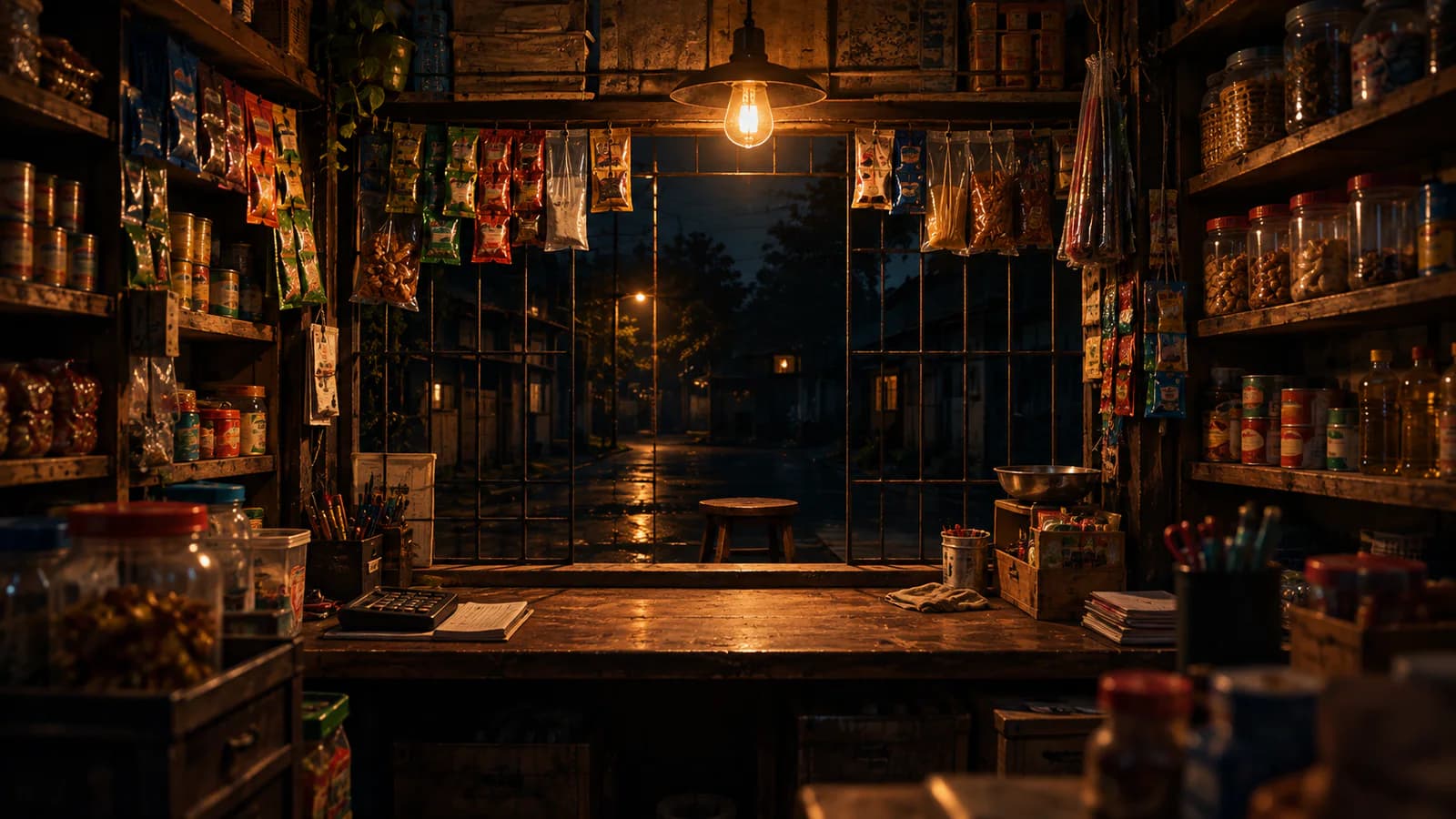
Narinig Mo Ba? teaches its mechanics through the work of running a sari-sari store. Listen to a request, locate the product, check its price, take payment, and return the correct change. The routine is also the story: each customer brings another fragment of neighborhood gossip, and the meaning of those fragments changes as the evening darkens.
The game teaches you by asking you to work the counter. Take your time with the first request, watch for the prompt on screen, and use this page when you need a reminder—not as a substitute for the conversations that make the story work.
Quick start
Before You Start
Read carefully
Let each request and dialogue line finish before clicking.
Use a mouse
The current build relies on left click, held click, and right click.
Check the item
Similar packaging can make a hurried selection look correct.
Keep sound on
The score and ambient changes help signal the story's turn.
The store routine
Step-by-Step Walkthrough
Start the game and give it focus
Read the player information on the home page before using this walkthrough. Click once inside the game before interacting. If the first screen remains black, allow the current loading sequence to finish; if it does not recover, use the control notes in the Controls Guide.
Finish the conversation before leaving the counter
Customers deliver both the order and the story. Read the requested product and quantity, then choose any visible dialogue response required to continue. Rapidly trying to move views while a line or transition is still active is a common reason the scene seems stuck.
Find and verify the requested item
Move from the counter to the appropriate shelf view. A left click takes or drops an item, holding right click checks the selected item's price, and holding left click over its matching shelf position returns a mistaken item. On-screen prompts take precedence if an update changes these inputs.
Complete the sale and calculate change
Bring the correct product back to the counter and hand it over. Add the item prices to get the total, then subtract that total from the payment placed in front of you. Select bills and coins that add up to the exact difference. If the game will not accept a denomination, try a smaller one that does not exceed the amount still left to return.
Listen, reset, and continue the shift
After a correct transaction, stay with the conversation until the customer leaves and the next transition completes. The game advances through a sequence of visits rather than a free-roaming level. Look for changes in sound, phrasing, and familiar faces instead of searching for a combat objective or a hidden inventory screen.
Orders without guesswork
Customer Orders
Junjun's small coffee request is a useful opening example. Use it to learn the complete loop: identify the product, take it from the shelf, verify its price, return to the counter, and finish the transaction. Later requests add products or quantities, but the same sequence applies.
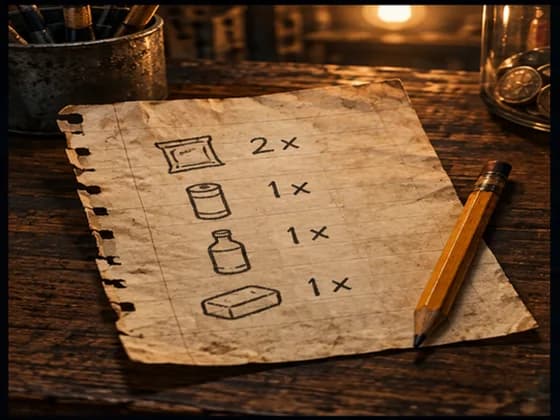
Junjun's first request
- Wait for the request to finish.
- Move to the shelf that holds the requested product.
- Take one matching item and verify it before returning.
- Complete the payment step and let the dialogue continue.
This is a navigation example, not a fixed price sheet. Check the value shown in your game.
Story clues
Important Story Clues
Treat repeated names, references to debts, changes in how regular customers speak, and shifts in the soundtrack as narrative evidence. The game points toward a desperate act of survival and its consequences, but leaves you to hear the full shape of that truth as the shift unfolds. Let the final sequence supply the answer before reading the full Story page.
Progressing the narrative
Story Events
You do not need to hunt for optional combat encounters or collect a separate lore archive. Progress comes from completing the current sale, choosing a visible response, and allowing the scene to finish. If nothing appears to happen, first check that you have supplied the exact quantity and exact change; then wait for the audio or dialogue transition instead of clicking rapidly.
The store's visual routine is intentionally repetitive. What matters is the difference between one visit and the next: a new concern, a familiar rumor repeated with a different meaning, or an environmental cue that makes the same counter feel less comfortable.
Final sequence
Reaching the Ending
Finish the remaining customer sequence and stay through the last transition. The game does not present a secret-route checklist or a separate ending path. If you want the final reveal interpreted after you see it, continue to the spoiler-heavy ending explanation.
Common Mistakes & Fixes
- Clicking too early: wait for the current line or transition to finish.
- Taking a similar item: use the price check before handing it over.
- Keeping a wrong product: hold left click over its matching shelf slot to return it.
- Incorrect change: recalculate the exact difference rather than matching the payment total.
- Missing the story: do not treat dialogue as a delay between store tasks.