
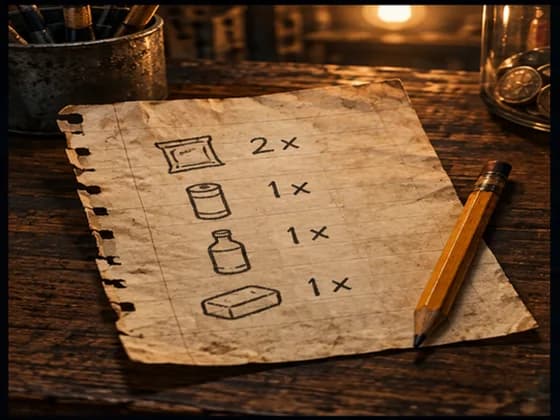
Narinig Mo Ba starts as a familiar piece of shop work. That simplicity is the point. Take the opening at a measured pace and the controls, prices, and conversations will become easier to follow without flattening the mood.
Think of the first shift as learning a small routine, not clearing a difficult challenge. You are allowed to pause between parts of an order, check a value again, or return an item. Those small corrections help the store make sense and leave more room to notice what each visitor is saying.
Settle into the store first
Before trying to be quick, get familiar with the counter, the shelf views, and the way the game signals that an action has finished. Let the opening conversation play out. Notice where an order is communicated, where an item is shown once selected, and when the game expects the next step. This first minute makes later requests feel less like guesswork.
Handle the first order in four beats
- Hear the whole request.Wait until the customer has finished. Keep the product name and quantity together in your head.
- Find and verify the item.Similar packaging can make a rushed choice feel right. Compare the type and the amount before moving on.
- Check prices, then total them.Use the price check whenever you need it. Add every item in the request before touching the change.
- Give back the difference.Payment minus the full total equals the exact change. Pause if the remaining amount does not look right.
When an order includes more than one item, complete the same check for every product before switching to the payment. It is tempting to calculate while you are still searching, but separating the shelf step from the counter step makes it much easier to spot a missing quantity or a look-alike item.

Slow down at the change
The calculation is simple, but it is the part most affected by hurry. Start from the customer's payment, take away the complete order total, and only then choose the amount to give back. Do not use the price of the final item as the total, and do not let the look of a large note persuade you that the change must be large.
If your answer feels wrong, run the order again from the start: item prices first, total second, payment third, change last. Rechecking the sequence takes only a few seconds and is more reliable than trying to rescue the number in your head.
Small habits that help
- Use a desktop mouse if you can. The game is most comfortable when you have a precise pointer for shelves and counter actions.
- Let dialogue and scene changes finish before making another input.
- Read the item and quantity as a pair; remembering only one is how a near-match slips in.
- Check a price before committing to the total, especially when you are unsure.
- Keep the sound on. Shifts in tone are part of how the game sets its pace.
- Finish once before opening story or ending explanations if you want the reveal unspoiled.
When an order feels stuck
Stop and identify where the loop broke: the requested item, the selected item, the price, or the remaining change. Rechecking one stage is faster than guessing at all of them. If the player has stopped responding, make sure the game window has focus, wait for any transition to finish, and try the current prompt again.
If you still cannot see what went wrong, return to the customer's request and rebuild the transaction in order. This is kinder to a first playthrough than looking up a story explanation or jumping to a spoiler-heavy walkthrough. The satisfaction is in recognizing the routine for yourself.
Protect the first playthrough
If you prefer to discover the final turn alone, stop here. If not, the practical rhythm above also explains why the ending works: you have spent the whole game learning to treat the counter as safe and the neighborhood chatter as background.
What the ending changes
Full story spoilers: this guide reads the final reveal as suggesting Junjun's death and turning the gossip heard during the shift into something far more serious. It also reads Mare's closing confrontation as pointing toward her involvement, while the exact chain of responsibility remains open for players to piece together from the dialogue. The horror is not just the final image; it is the realization that the neighborhood had been passing around fragments of a real crisis.
That is why listening matters even when an order feels routine. The game connects prices, payments, and quiet conversations to questions of pressure, debt, and responsibility. It does not give every motive a neat answer, but it gives enough for the player to understand that the people behind the stories were never just background color.
Listen between sales. The work loop is only half the experience. Let conversations and the changing atmosphere breathe instead of treating them as delays between orders.